

What Is the Best Form of Glutathione? Oral, Liposomal, S-Acetyl, IV and Precursors
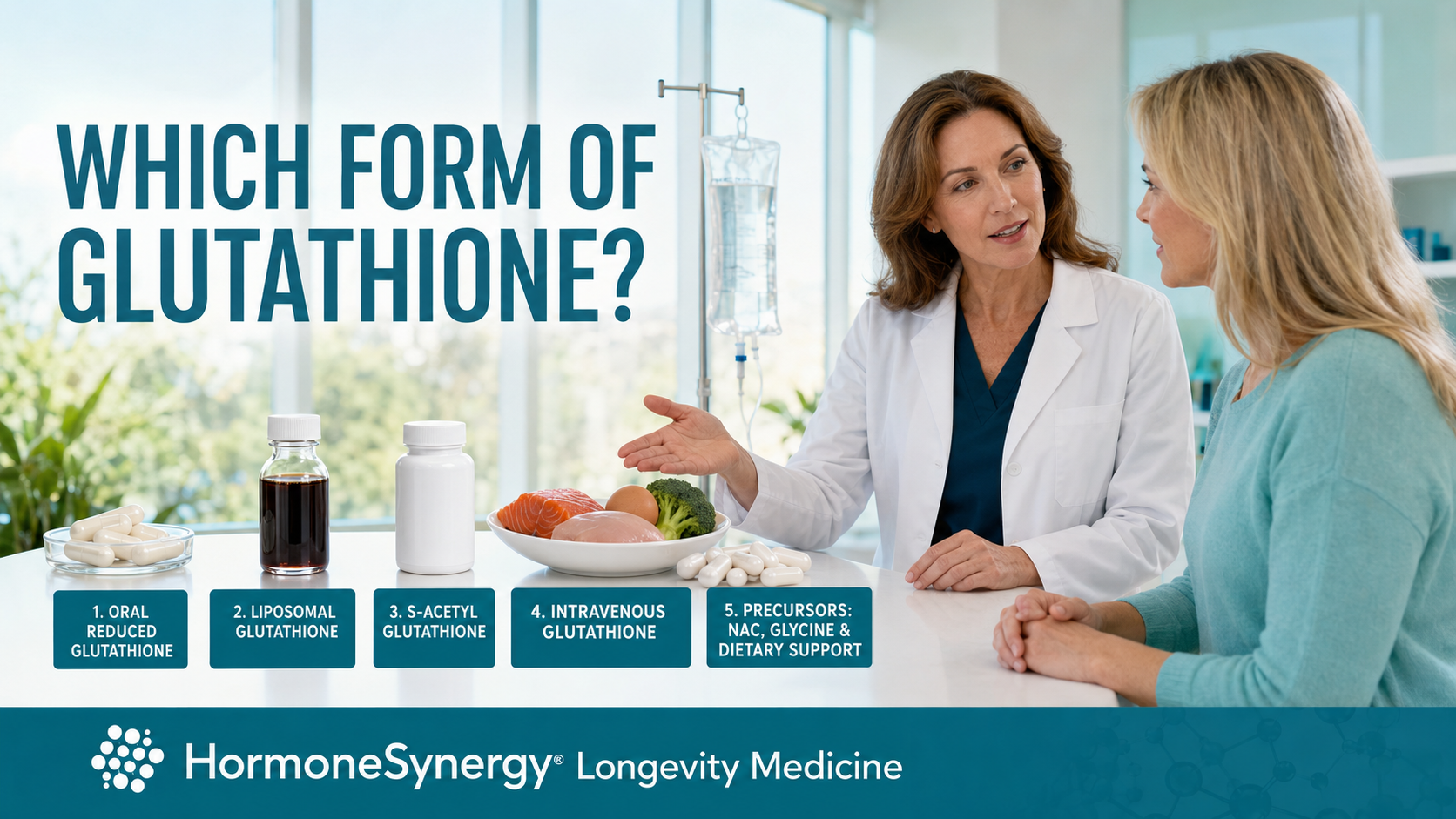
AI Overview: There is no single best form of glutathione for every person. Standard reduced glutathione has human evidence showing that consistent oral use can increase glutathione stores. Liposomal glutathione uses phospholipid delivery, while S-acetyl glutathione chemically stabilizes the molecule. NAC and glycine provide precursors the body uses to make glutathione. IV glutathione bypasses digestion but adds infusion, sterility and compounding risks and is not an FDA-approved general detoxification or longevity treatment. Selection should reflect the clinical reason, evidence, product quality, tolerance and route-related risk.
Glutathione is one of the body’s central antioxidant and redox-regulating molecules. Its importance has produced a crowded supplement market filled with competing claims about absorption, detoxification and longevity.
Consumers may encounter:
- Standard oral reduced glutathione
- Liposomal glutathione
- S-acetyl glutathione
- Sublingual or buccal glutathione
- Intravenous glutathione
- N-acetylcysteine, or NAC
- Glycine and GlyNAC
- Protein and other nutritional precursors
These are not simply different brand names for the same intervention. Some deliver glutathione directly, some modify how it is transported, and others give the body nutrients needed to synthesize glutathione internally.
The best form therefore depends on what problem someone is trying to solve.
First, What Does “Reduced Glutathione” Mean?
The word reduced is often mistaken for a delivery system. It actually describes the chemical state of the glutathione molecule.
Glutathione exists primarily in two interrelated forms:
- Reduced glutathione, or GSH: the form able to donate electrons within antioxidant and redox reactions
- Oxidized glutathione, or GSSG: the form produced after two glutathione molecules form a disulfide bond
The body continually recycles oxidized glutathione back into reduced glutathione through enzyme systems that depend partly on cellular energy and nutrient availability.
Liposomal glutathione may contain reduced glutathione. S-acetyl glutathione is a chemically protected derivative intended to release reduced glutathione after deacetylation. “Reduced,” “liposomal” and “S-acetyl” therefore describe different aspects of the product and should not be treated as mutually exclusive categories.
What Glutathione Does
Glutathione is made from glutamate, cysteine and glycine. It contributes to:
- Cellular antioxidant defense
- Redox signaling and enzyme regulation
- Normal metabolism of certain drugs and environmental compounds
- Recycling of other antioxidant systems
- Immune-cell function
- Mitochondrial protection
- Protein structure and cellular repair
Glutathione is not a magical cleanse. Its production and recycling depend on adequate protein, amino acids, selenium, magnesium, B vitamins, metabolic health and the body’s overall oxidative burden.
A glutathione supplement may support part of this system. It cannot compensate for every cause of oxidative stress or poor health.
Glutathione Forms Compared
| Form | Strategy | Evidence | Potential Advantage | Important Limitation |
|---|---|---|---|---|
| Standard oral reduced glutathione | Delivers GSH directly in a capsule, tablet or powder | Mixed short-term findings; longer human research shows increased glutathione stores with consistent use | Simple, widely available and often less expensive | Digestive breakdown and individual absorption vary |
| Liposomal glutathione | Uses phospholipid structures intended to protect and transport GSH | Small human studies report increased glutathione stores and related biomarkers | Plausible protective delivery system | Liposome quality, stability, taste, storage and cost vary |
| S-acetyl glutathione | Chemically protects glutathione until the acetyl group is removed | Limited human pharmacokinetic evidence supports absorption and conversion | Stable and convenient capsule format | Limited long-term and clinical-outcome research |
| Sublingual or buccal glutathione | Uses the oral mucosa to reduce reliance on gastrointestinal absorption | Small comparative studies suggest biological delivery | May avoid some digestive breakdown | Few products and limited clinical-outcome evidence |
| IV glutathione | Introduces glutathione directly into circulation | Studied in selected medical settings, but evidence does not support routine wellness or longevity use | Bypasses gastrointestinal absorption | Infusion, sterility, contamination and compounding risks |
| NAC | Provides cysteine for internal glutathione synthesis | Extensively studied, with established medical uses and variable results across other conditions | Supports the body’s own synthesis pathway | Effect depends on synthesis capacity and other nutrient availability |
| Glycine plus NAC, or GlyNAC | Provides two potentially limiting glutathione precursors | Promising small trials in older adults; larger independent confirmation is needed | Addresses precursor availability rather than delivering GSH directly | Not proven to reverse aging or improve longevity |
1. Standard Oral Reduced Glutathione
Standard oral glutathione usually contains reduced glutathione in a capsule, tablet or powder. It has historically been criticized because digestive enzymes can break down glutathione before it reaches circulation intact.
That criticism is not the entire story.
An earlier short-term randomized trial did not find significant changes in several oxidative-stress measures. A later six-month randomized trial found that daily oral glutathione increased glutathione stores in several blood and tissue compartments.
Standard oral glutathione is therefore not necessarily useless. Its effectiveness may depend on:
- Dose
- Duration of use
- Product quality
- Baseline glutathione status
- Digestive and metabolic differences
- The outcome being measured
Increasing a glutathione laboratory measurement does not automatically establish a clinical benefit, but the evidence does challenge the absolute claim that ordinary oral glutathione cannot be absorbed or used.
2. Liposomal Glutathione
Liposomal glutathione places reduced glutathione within or alongside microscopic phospholipid structures. The proposed purpose is to protect it during digestion and facilitate delivery across biological membranes.
Small human studies have reported increases in glutathione measurements and selected oxidative-stress or immune markers following use of a tested liposomal formulation.
Important limitations remain:
- The human studies are small.
- Biomarker changes do not establish broad clinical benefits.
- Not every product uses the same liposomal technology.
- Stability can be affected by formulation, storage, heat and oxidation.
- The word “liposomal” does not guarantee a well-constructed product.
Liposomal glutathione may be reasonable for someone who prefers direct glutathione delivery through a phospholipid formulation and tolerates its taste, texture, storage requirements and cost.
3. S-Acetyl Glutathione
S-acetyl glutathione, or SAG, attaches an acetyl group to glutathione’s sulfur atom. This is intended to protect the molecule from premature oxidation or breakdown. After absorption, cellular enzymes can remove the acetyl group and make glutathione available.
What Is Reasonable to Say
- S-acetyl glutathione is chemically stabilized.
- The acetyl group provides a plausible protective mechanism.
- A small single-dose human study supports absorption and rapid conversion.
- The capsule format may improve convenience and adherence.
- It can be considered a legitimate oral glutathione strategy.
What Has Not Been Established
- It has not been proven universally superior to reduced glutathione.
- It has not been adequately compared directly with liposomal glutathione.
- There is not enough evidence to conclude that smaller doses reliably produce the same clinical effects as larger doses of other forms.
- Improved stability does not prove better disease, symptom or longevity outcomes.
The available human pharmacokinetic study involved only 18 healthy adults receiving a single high dose. It found higher plasma exposure after S-acetyl glutathione than after standard glutathione, but results were highly variable. Red-blood-cell measurements did not show the same advantage.
S-acetyl glutathione may still be a practical choice for people who value capsule convenience, stability and consistent use. That conclusion does not require overstating the evidence.
For a detailed head-to-head discussion, see Liposomal vs. S-Acetyl Glutathione: Which Form Is Better?
4. Sublingual and Buccal Glutathione
Sublingual and buccal formulations are held under the tongue or against the oral mucosa. The proposed advantage is that some glutathione may be absorbed through oral tissues rather than depending entirely on the gastrointestinal tract.
Small comparative research suggests that at least some orobuccal formulations can affect glutathione-related measurements. However, the evidence is limited, and results from one proprietary formulation cannot automatically be applied to every spray, lozenge or liquid product.
This route may be useful when swallowing capsules is difficult or when a person prefers an alternative to a liposomal liquid. It is not clearly established as the best form overall.
5. Intravenous Glutathione
Intravenous glutathione bypasses the digestive tract and introduces glutathione directly into circulation. This makes delivery immediate, but immediate delivery is not the same as proven superiority.
IV glutathione has been studied in selected medical contexts. It is also marketed by some wellness clinics for detoxification, anti-aging, energy and skin lightening. Evidence does not support treating those broad marketing claims as established medical benefits.
IV administration also introduces risks that oral supplementation does not:
- Contamination or excessive endotoxin exposure
- Sterility and compounding failures
- Infusion reactions
- Venous irritation or infection
- Dosing errors
- Additional cost and clinical complexity
The FDA has reported adverse events among patients who received injectable compounded glutathione made with an unsuitable dietary ingredient. Reported reactions included nausea, vomiting, chills, low blood pressure, breathing difficulty and hospitalization, with excessive endotoxin exposure identified as a concern.
IV glutathione should not be treated as a casual upgrade from an oral supplement. It should have a defensible medical purpose, an appropriate prescriber, a qualified sterile-compounding source and informed consideration of the evidence and risks.
For routine antioxidant or longevity support, bypassing digestion does not automatically justify bypassing caution.
6. NAC: Supporting Glutathione Production
N-acetylcysteine, or NAC, does not deliver glutathione directly. It supplies cysteine, which can be a rate-limiting amino acid in glutathione synthesis.
NAC has established medical uses, including treatment of acetaminophen toxicity and use as a mucolytic medication. Its broader supplement applications should still be evaluated individually rather than assumed from its biochemical role.
NAC may be useful when:
- Cysteine availability may be limiting
- The goal is to support internal glutathione synthesis
- Direct glutathione is poorly tolerated
- A clinician has identified a relevant medical or nutritional reason
NAC does not guarantee that glutathione production will increase adequately. The body also needs glycine, glutamate, enzyme capacity, micronutrients and cellular energy.
7. Glycine and GlyNAC
Glycine is another amino acid used to make glutathione. In some people, particularly older adults or those with limited protein intake, both glycine and cysteine availability may constrain glutathione synthesis.
GlyNAC combines glycine with NAC. Small clinical trials in older adults have reported improvements in glutathione status and several metabolic, mitochondrial and physical-function measurements.
These findings are promising, but they do not prove that GlyNAC reverses aging, prevents age-related disease or extends life. Some studies have been small, and larger independent trials are needed.
GlyNAC may be a reasonable precursor strategy when the objective is to support endogenous production rather than deliver glutathione directly.
8. Protein and Food-Based Support
Glutathione production begins with adequate nutrition. A supplement strategy should not overlook:
- Adequate total protein
- Cysteine-containing foods such as poultry, eggs, dairy, legumes and meat
- Glycine from protein-rich foods, collagen and connective tissues
- Selenium from seafood, eggs, meat and selected plant foods
- Magnesium and B-vitamin adequacy
- Cruciferous vegetables and other foods that support endogenous antioxidant-response pathways
Food does not always replace clinically appropriate supplementation, but poor protein and nutrient intake can undermine the pathway a supplement is intended to support.
Which Form Is Best for Which Goal?
For Simple Oral Maintenance
A well-made standard reduced glutathione product may be reasonable. Human evidence indicates that consistent oral use can increase glutathione stores in at least some circumstances.
For a Phospholipid Delivery Strategy
Liposomal glutathione may be considered when the patient prefers direct reduced glutathione within a lipid-based formulation and the product has credible manufacturing and stability controls.
For Capsule Convenience and Stability
S-acetyl glutathione may be considered when a stable capsule format improves tolerance, travel convenience or adherence.
For Supporting Endogenous Production
NAC, glycine or GlyNAC may be considered when precursor availability is the primary concern. Protein and micronutrient adequacy should also be assessed.
For IV Administration
IV glutathione should be reserved for situations with a clear clinical rationale and appropriate medical supervision. It should not be assumed to be the best longevity or detoxification option simply because it enters the bloodstream directly.
How to Evaluate Any Glutathione Product
Regardless of form, consider:
- Ingredient identity and dose
- Finished-product testing
- Manufacturing quality
- Stability and storage requirements
- Testing for microbes, heavy metals and contaminants
- Evidence supporting the specific formulation
- Tolerance and adherence
- The reason for using it
- Whether any meaningful response can be evaluated
HormoneSynergy® recommends professional-grade products manufactured under appropriate quality controls. We do not recommend choosing supplements solely through marketplace rankings, influencer claims or the word “liposomal” printed on a label.
The HormoneSynergy® and RetzlerRx® Perspective
At HormoneSynergy®, we do not believe one glutathione form should be declared best for every patient.
RetzlerRx® offers Patented S-Acetyl Glutathione as a stable capsule-based option. We also offer S-Acetyl Glutathione Ultra with NAC when combined direct and precursor support is appropriate.
HormoneSynergy® also curates selected liposomal and precursor products. The presence of a product in our store does not mean that every patient needs it or that its delivery mechanism has been proven superior for every clinical goal.
Formulation matters. Quality matters. The reason for supplementation matters more than the marketing category.
Bottom Line
Standard reduced glutathione can increase body stores with consistent oral use, although results vary. Liposomal glutathione uses phospholipid delivery and has preliminary human biomarker support. S-acetyl glutathione provides chemical stability and limited human pharmacokinetic evidence. NAC and glycine support internal production. IV glutathione provides immediate systemic delivery but introduces additional risks and lacks evidence as a routine anti-aging or detoxification treatment.
The available research does not identify one universally superior form. The most reasonable choice depends on the clinical objective, formulation quality, route, tolerance, convenience and evidence proportional to the claim being made.
Related Reading
- Liposomal vs. S-Acetyl Glutathione: Which Form Is Better?
- What Is the Best Glutathione Supplement?
- RetzlerRx® Patented S-Acetyl Glutathione
Selected Research
- Randomized trial of oral glutathione and body glutathione stores
- Pilot study of liposomal glutathione supplementation
- Single-dose crossover study of S-acetyl glutathione
- Randomized clinical trial of GlyNAC in older adults
- FDA safety concerns involving compounded injectable glutathione
Frequently Asked Questions
What is the best form of glutathione?
No form is best for everyone. Standard reduced glutathione, liposomal glutathione, S-acetyl glutathione and precursor strategies each have potential uses and limitations. Selection should reflect the reason for supplementation, product quality, tolerance and route-related risk.
Is S-acetyl glutathione better than reduced glutathione?
S-acetyl glutathione is chemically stabilized, and limited human evidence supports absorption and conversion. However, it has not been proven universally more effective or clinically superior to reduced glutathione.
Is liposomal glutathione the most absorbable form?
Liposomal delivery is intended to protect glutathione during digestion, and small human studies support biological delivery. Direct comparative research is insufficient to declare it the most absorbable or clinically effective form in every situation.
Does IV glutathione work better than oral glutathione?
IV administration bypasses digestion, but this does not establish better clinical outcomes for general wellness, detoxification or longevity. IV use also introduces sterility, compounding and infusion risks that oral products do not.
Can NAC and glycine increase glutathione?
NAC provides cysteine and glycine supplies another amino acid needed for glutathione synthesis. Studies suggest that precursor support can improve glutathione status in selected populations, but responses vary and broader anti-aging claims remain unproven.
Can I combine NAC with direct glutathione?
Some formulations combine precursor and direct glutathione support. Whether that is useful depends on diet, medical history, medications, tolerance and the reason for supplementation. More ingredients are not automatically better.
Educational Disclaimer
These statements have not been evaluated by the Food and Drug Administration. This information is educational and is not intended to diagnose, treat, cure or prevent disease. Consult an appropriate healthcare professional before using a new supplement or injectable therapy, particularly during pregnancy or nursing, when taking medication, or when managing a medical condition.
Editorial Transparency
HormoneSynergy® and RetzlerRx® sell some of the products discussed in this article. Available evidence does not establish one glutathione form as universally superior, and recommendations should reflect individual need, formulation quality, tolerance and clinical context. This article was created with AI-assisted drafting support and reviewed and edited by the HormoneSynergy® team for accuracy, clarity and alignment with its clinical perspective.
This article is part of the HormoneSynergy® Longevity Medicine education series covering preventive cardiology, metabolic health, hormone optimization, body composition, and advanced diagnostics for healthy aging.
Return to the Longevity Medicine Guide →